Resin Properties
| Parameter |
210 |
Test Method |
| Physical Properties |
| Density( g/cm3) |
1.22-1.28
|
GB/T1033-2010
|
| Melt Index, g/10min (190℃ /2.16kg)
|
12-40 |
GB/T3682-2000
|
| Melt Point
|
160-170 |
GB/T1040-2006
|
| Glass Transition Temperature(ºC)
|
54-60 |
GB/T1040-2006
|
| Moulding Shrinkage %
|
0.004 |
GB/T1043-2008
|
Processing Temperature Profile of 210
| Processing condition |
Data set(℃) |
| Feed Throat |
20-40 |
| Convey Section |
190-210 |
| Compression Section |
180-200 |
| Metering Section |
180-200 |
| Nozzle |
180-200 |
| Back Pressure |
100-300psi |
Notice: materials can be successfully processed in the temperature range of 150℃-160℃ after water absorption, but the surface of the product may appear bubble, white line, brittle and other phenomena.
Processing Information
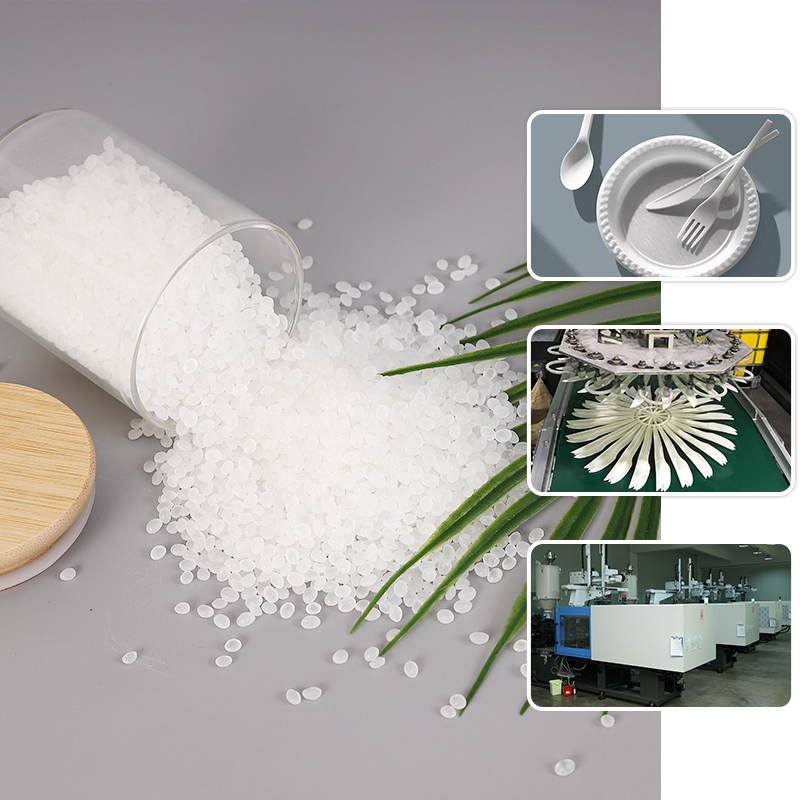
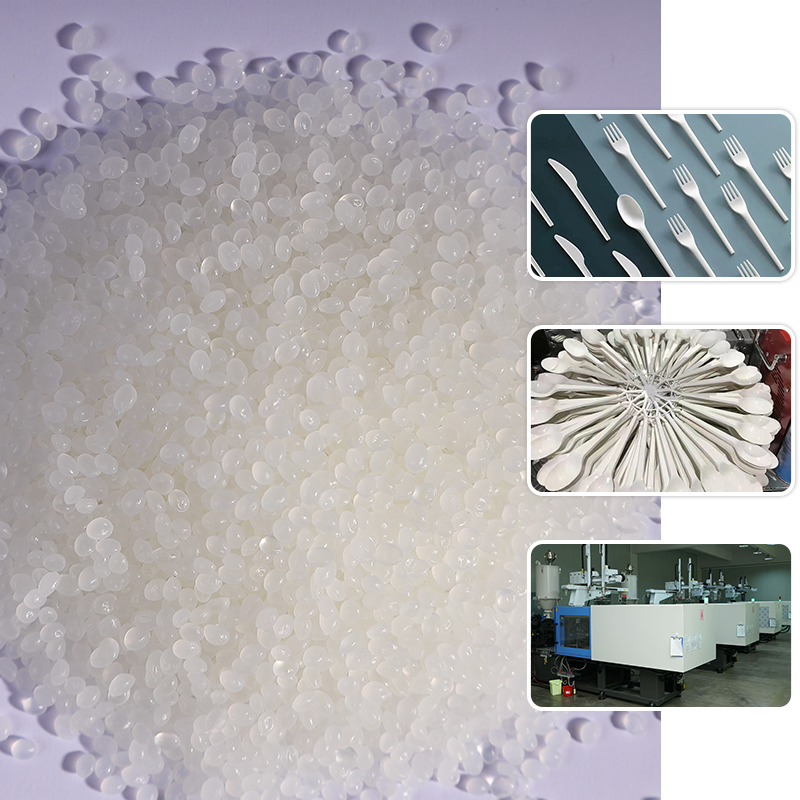
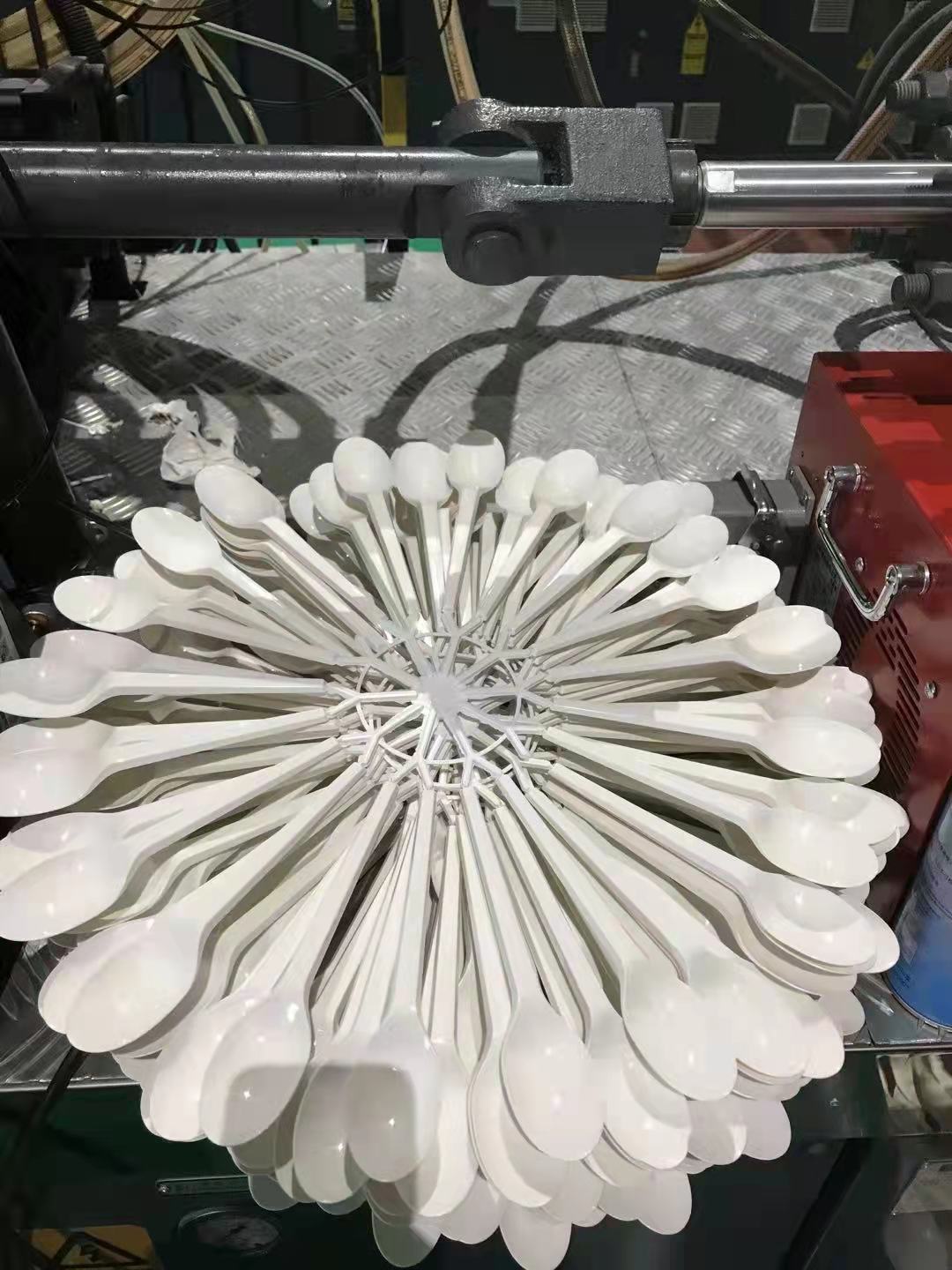
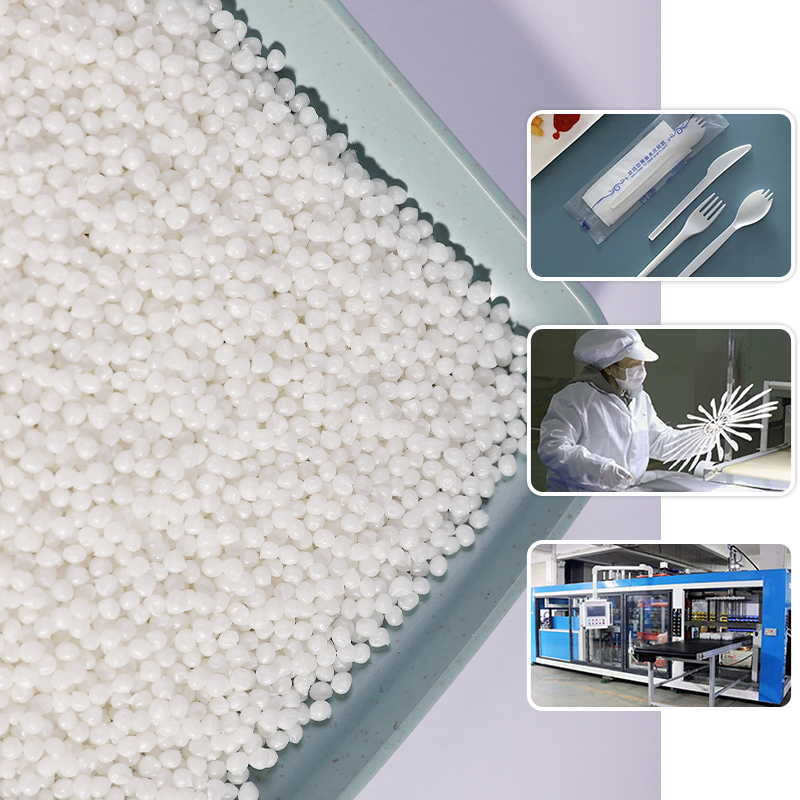
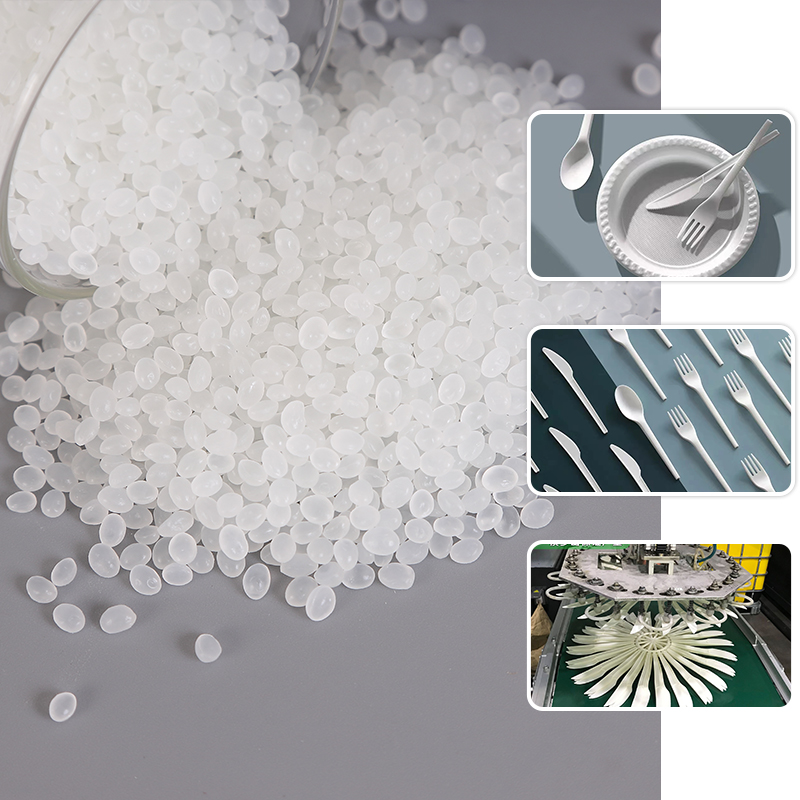
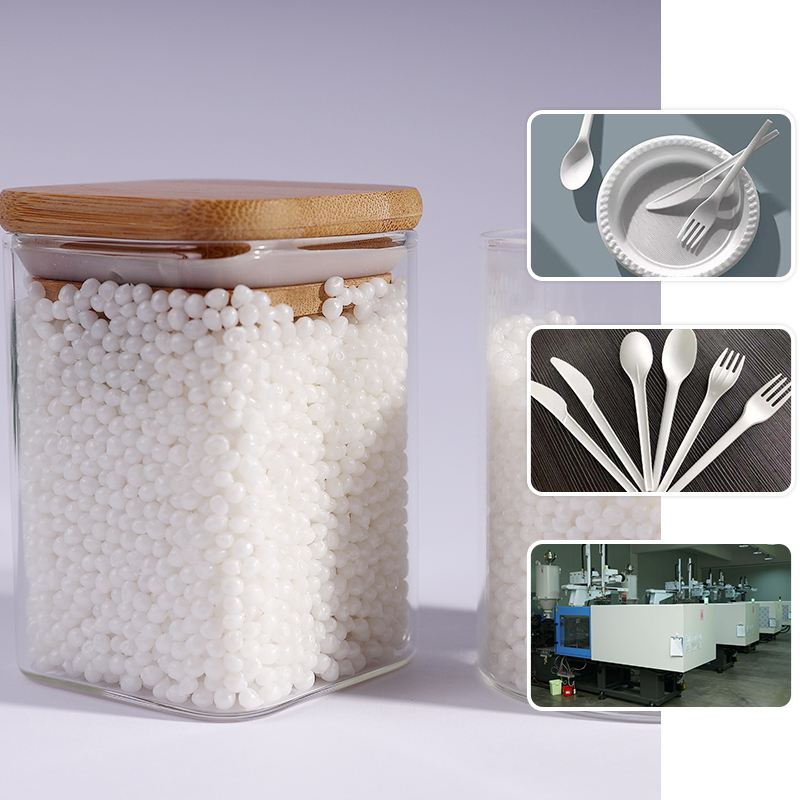
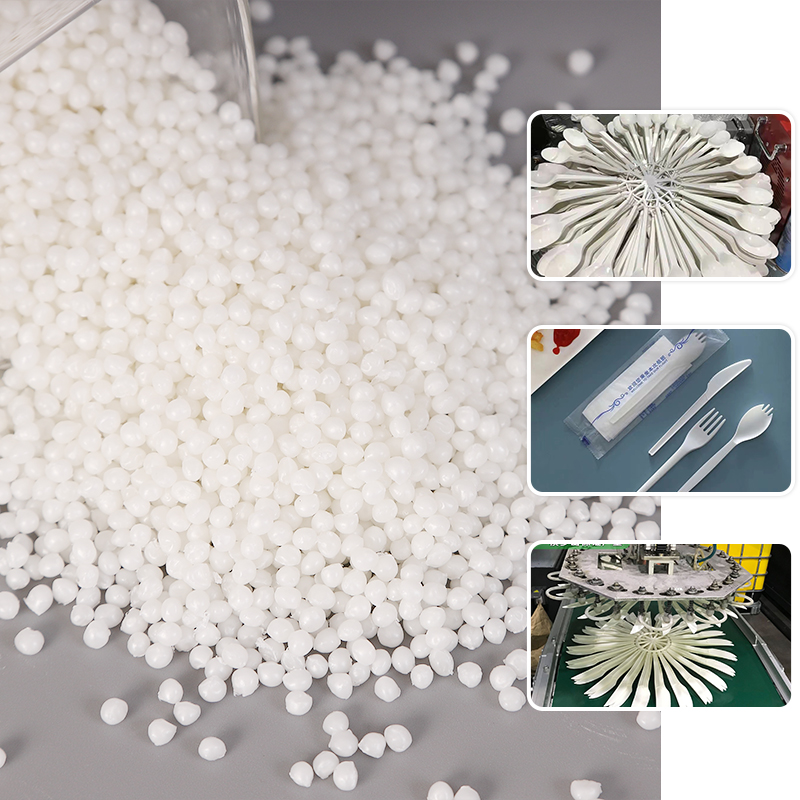
Biomaterials PLA polymer 210 injection molding applications can be processed on conventional injection molding equipment. The material is stable in the molten state, provided that the drying procedures are followed. Mold flow is highly dependent on melt temperature. It is recommended to balance screw speed, back pressure and process temperature to control melt temperature.
Process Details
1.Molding request
⑴A good cooling system is needed for mold. Water chiller is necessary in the
process. For example a 200g injection molding machine need a 2kw. water chiller.
⑵ Fast injection speed is recommended for thin-wall injection parts, while slow
injection speed is recommended for thick-wall injection parts. The wall-thickness should be less than 6mm. Cooling water is recommended for mold core, mold cavity and moldboard. Make sure that the mold temperature should be controlled between 20-30℃.
(3) Different products require different molds, especially gate parts. If product
thickness is in 3-5 mm range with short injection, may use point gate, gate diameter D
between 1.0-1.5 mm; if it is thin-wall product with thickness less than 1 mm, it is
recommended to use direct gate, gate diameter D>3.0mm, or injection mold with hot
runner, the gate diameter can be controlled at mm.0.8-1.0mm.
(4) Other mold parameters requirement and dimension accuracy of parting surface
should be less than 0.02 mm; For container products with large injection depth, the
general requirement of remolding slope is that the outer surface is not less than 1.5
degrees and the inner surface is not less than 3.0 degrees.
2, Drying
Biomaterials PLA polymer 210 has been crystallized and dried when leaving the factory, the highest heat-resistant temperature of the crystalline resin is 110℃, moisture content less than 200 ppm, and stored in a nitrogen-filled aluminum foil bag, protected by a box or bag. Keep the packing sealed before use, seal the unused material quickly after use, otherwise it will absorb moisture. In the injection molding process, the moisture-absorbed resin may have increased material fluidity, processed products becoming brittle, silver lines on the surface of the product, and white matter on the polished surface of the mold. If the material is exposed to the air for more than 1 hour, it must be re-dried before it can be used. If the material is exposed to the air for less than 1 hour, it can be used directly, but the possibility of water absorption cannot be ruled out in an environment with high air humidity.
When re-drying, it is forbidden to use hot air without dehumidification (using
drying equipment without a dehumidifier will not only can not achieve the drying effect, but will accelerate the water absorption of PLA), and must use dehumidified and dried air to ensure that the PLA resin is added to the hopper does not absorb moisture during the drying process. When using an ordinary oven, it must be equipped with dehumidification equipment to dehumidify and dry the air blown into the oven. The recommended equipment is Shini SD-H series honeycomb wheel dehumidification equipment, or other types of dehumidification equipment with the same effect. SD-H series of dehumidifiers supplied by Shini Plastics Technologies Inc. are strongly recommended for PLA drying.
Typical PLA drying conditions are shown in the table below:
| Drying Parameter |
Typical Settings
|
| Residence Time(hours)
|
2-3
|
| Air Temperature(℃) |
70 ( dry hopper temperature set) |
| Air Dew Point(℃)
|
-40 (molecular sieve dehumidifier dryer set)
|
| Air Flow Rate(m3 /hr-kg resin)
|
>1.85 |
Method1: Crush the regrind directly in the process, and mixed to use with new
material.(recommended)
Method 2: Cumulate the regrind ( no more than 3 months) before crush and dry, and
process together with new material. Typical PLA drying conditions are shown in the table below:
| Drying Parameter
|
Typical Settings
|
| Residence Time(hours)
|
4-6
|
| Air Temperature(℃)
|
55 ( dry hopper temperature set)
|
| Air Dew Point(℃)
|
-40 (molecular sieve dehumidifier dryer set)
|